


How can a USB dual-use interface USB flash drive reduce heat generation during cross-device data transfer through hardware optimization?
Release Time : 2025-12-31
As a core tool for cross-device data transfer, the hardware optimization of a USB dual-use interface (USB flash drive) is crucial for reducing heat generation and improving stability. Heat generation primarily stems from the high-load operation of the controller chip, frequent read/write operations on the storage medium, and energy loss in the voltage conversion circuitry. Dual-interface designs (such as Type-C and USB-A) further increase hardware complexity. Targeted optimization of the hardware architecture and material selection can significantly reduce heat accumulation during cross-device transfers.
The controller chip is the core heat source of a USB dual-use interface USB flash drive, and its performance directly affects transfer efficiency and temperature control. High-end dual-use flash drives use controller chips based on enterprise-grade solid-state drives (SSDs). These chips reduce unnecessary calculations and lower power consumption through optimized algorithms. For example, some products dynamically adjust the controller frequency, reducing performance to minimize heat generation when transferring small files and running at full speed when processing large files, balancing efficiency and temperature. Furthermore, the packaging process of the controller chip is also critical; bare-chip packaging or packaging with high thermal conductivity materials accelerates heat conduction to the casing, preventing localized overheating.
Optimization of the storage medium is equally important. NAND flash memory chips generate heat during read and write operations, especially during write operations where voltage fluctuations cause temperature increases. Dual-purpose USB flash drives often use multi-layer cell (MLC) or triple-layer cell (TLC) flash memory and optimize write strategies through firmware to reduce energy loss from repeated erase and write operations. For example, some products use "wear leveling" technology to distribute data write locations and avoid overheating in a single area; others introduce SLC caching mode, temporarily using a single-layer cell to store data during high-speed transfers, reducing power consumption and heat generation. Furthermore, some high-end models even integrate small DRAM cache chips to further reduce the need for frequent flash memory read and write operations, thereby controlling temperature.
Voltage conversion circuits are another major source of heat. The 5V voltage provided by the USB interface needs to be converted to the 3.3V, 1.8V, etc., voltages required by the chip and storage medium. Energy loss during the conversion process is released as heat. Optimizing this aspect requires attention to both circuit design and materials: on the one hand, using high-efficiency DC-DC converter chips to reduce energy loss; on the other hand, shortening the distance between the voltage conversion module and the controller and flash memory in the PCB layout to reduce line resistance and heat generation. Some products also add thermal pads or thermally conductive adhesive around the voltage conversion circuit to quickly conduct heat to the metal casing.
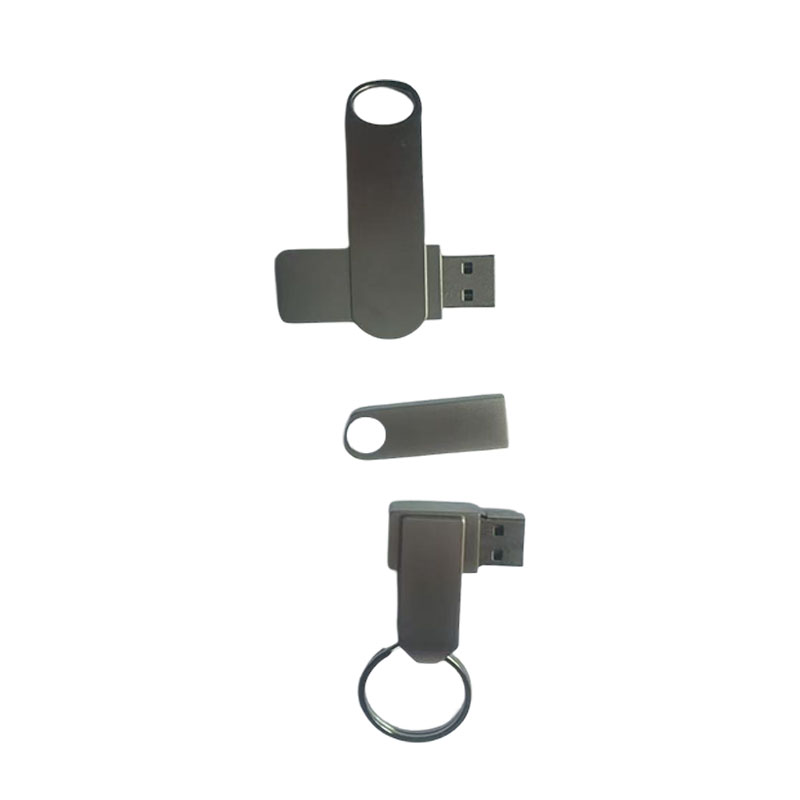
Optimizing the thermal conductivity of the metal casing is a direct way to reduce overall temperature. Aerospace-grade aluminum alloy, due to its high thermal conductivity and lightweight characteristics, has become the preferred material for high-end dual-purpose USB flash drives. The metal casing not only quickly dissipates internal heat but also increases the heat dissipation area through surface heat dissipation fins or a frosted finish. For example, some products design the casing with a multi-layered structure, embedding copper foil or graphene heat sinks to form an integrated "heat conduction-heat dissipation" system. Furthermore, the pressure resistance and wear resistance of the metal casing indirectly improve product lifespan and prevent additional heat generation caused by poor contact of internal components due to casing deformation.
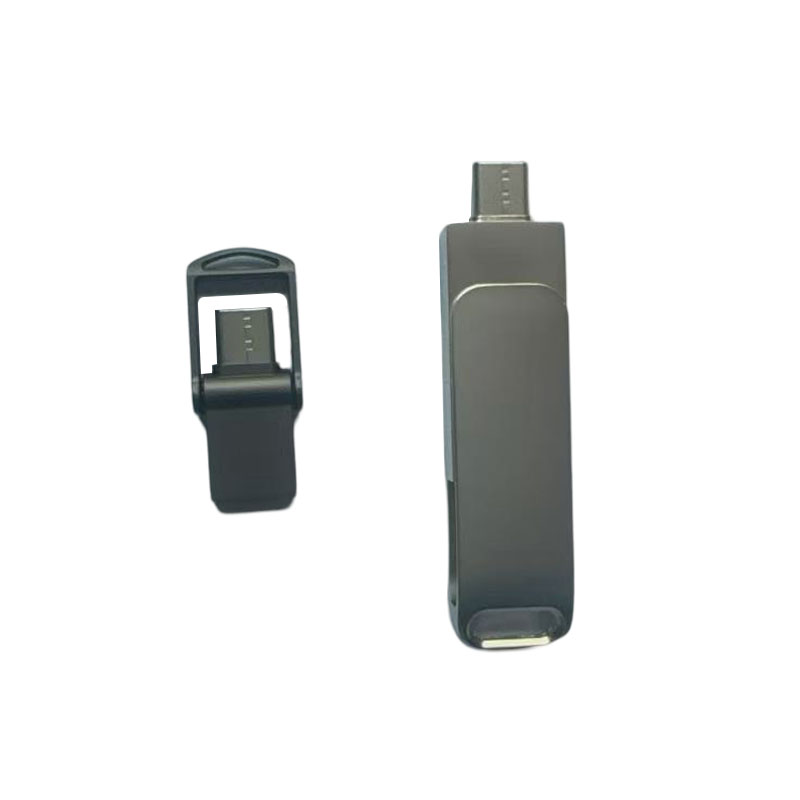
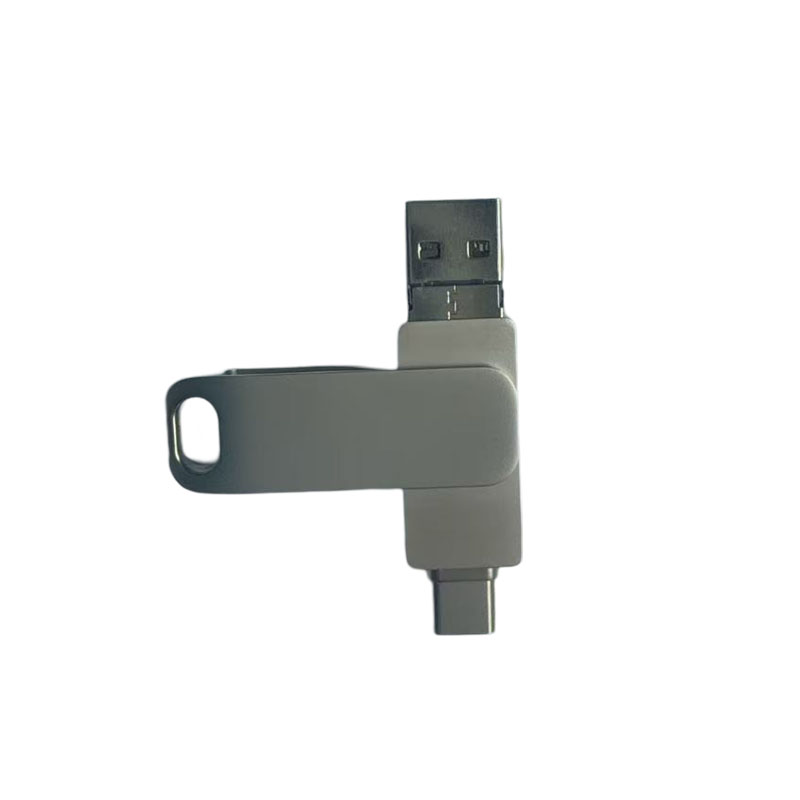
The physical structure optimization of the dual-interface design is also crucial. Switching between Type-C and USB-A interfaces requires a rotating or sliding structure; improper design can lead to increased contact resistance and localized heat generation. High-quality dual-purpose USB flash drives utilize unibody molding technology to reduce gaps between the interface module and the motherboard, lowering contact resistance. Simultaneously, gold or rhodium plating on the interface contacts enhances conductivity and corrosion resistance, preventing poor contact due to oxidation. Some products also add dust covers or sealing rings around the interface to prevent dust ingress that could cause short circuits or contact problems, further stabilizing temperature performance during data transfer.
Hardware optimization also needs to be coordinated with software to form a complete heat dissipation solution. For example, some dual-purpose USB flash drives have built-in temperature sensors that monitor internal temperature in real time and adjust transmission strategies via firmware: when the temperature approaches a threshold, it automatically reduces transmission speed or switches to a low-power mode, restoring performance once the temperature drops. This "dynamic temperature control" mechanism ensures transmission efficiency while preventing damage to the hardware from sustained high temperatures. Furthermore, manufacturers optimize the power management algorithm of the main control chip through firmware updates, further reducing unnecessary energy consumption.
From a long-term usage perspective, the value of hardware optimization lies not only in heat control but also in product lifespan and data security. Excessive heat accelerates the aging of electronic components, leading to decreased transmission speeds and even data loss. Through multi-dimensional optimization of the main control chip, storage medium, voltage conversion, casing design, interface structure, and software collaboration, the USB dual-use interface USB flash drive can maintain stable operation at low temperatures during cross-device transfers, providing users with a reliable and efficient data storage experience. This deep hardware-level optimization is precisely the core competitive advantage that distinguishes high-end dual-use USB flash drives from ordinary products.