


How does the Micro USB Three-Port USB Flash Drive break down data barriers between smartphones, tablets, and computers?
Release Time : 2026-01-14
In today's increasingly mobile office and multi-device collaboration landscape, users often face a real dilemma: high-definition videos shot on smartphones cannot be directly imported to laptops; documents edited on tablets are difficult to quickly sync to desktops; and file transfer between different operating systems relies on networks, cloud services, or cumbersome adapters. The Micro USB Three-Port USB Flash Drive, with its ingenious "three-in-one" design, serves as a physical bridge bridging the device ecosystem gap, truly achieving efficient data transfer without a network, with plug-and-play functionality and cross-platform compatibility.
1. Three-Interface Layout: Covering the Mainstream Device Ecosystem
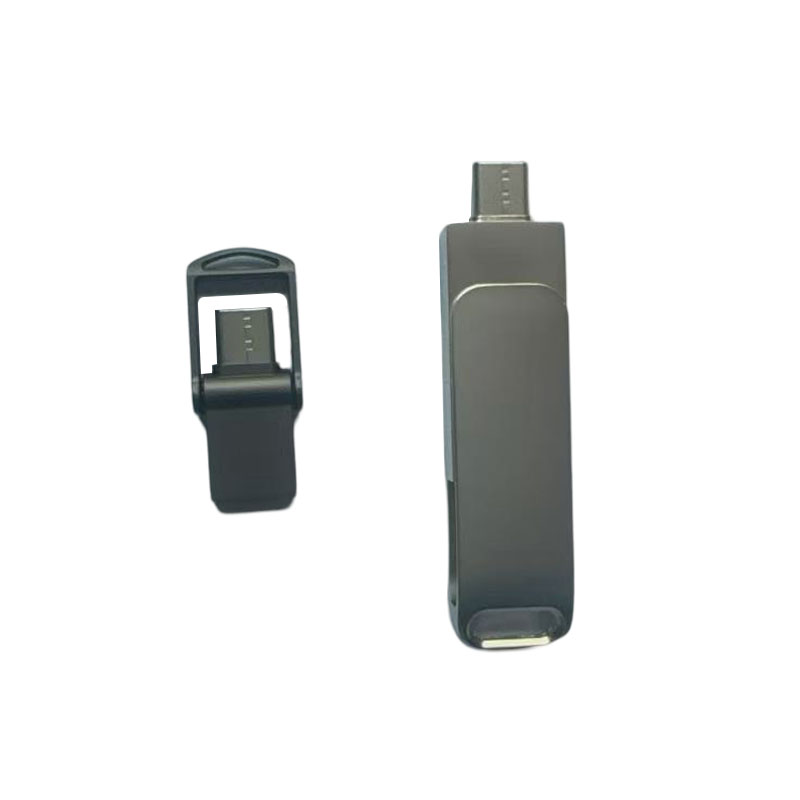
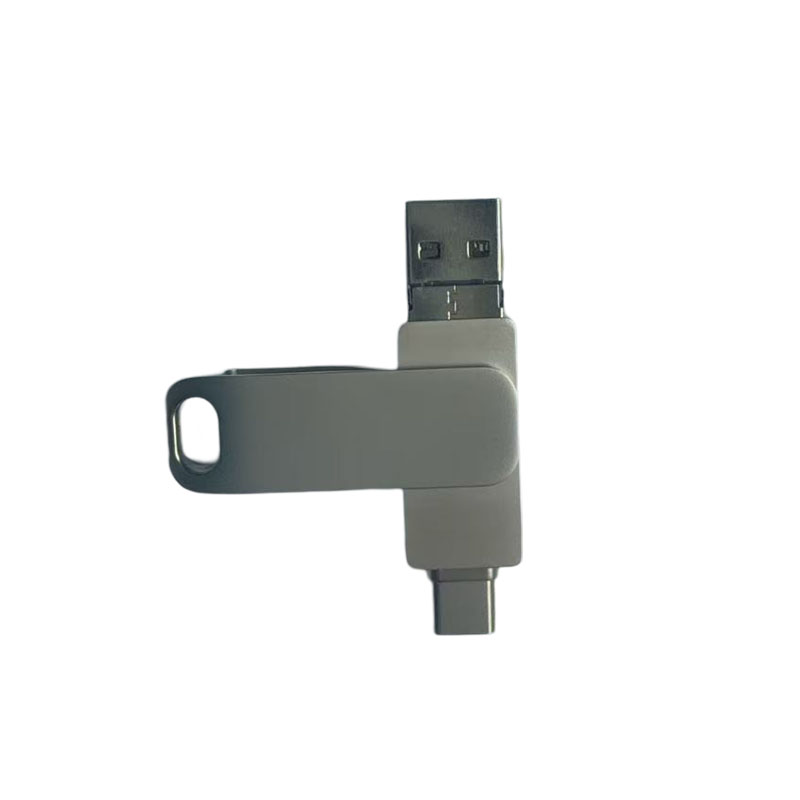
The core advantage of this USB drive lies in its three-in-one physical interface design. One end is a standard USB-A interface, which can be directly plugged into Windows PCs, Macs, or traditional USB card readers; another end is a Micro USB interface, designed specifically for older Android phones, tablets, and some electronic devices; and the third end is a USB-C interface, compatible with the latest Android flagships, iPad Pro, MacBook, and mainstream thin and light laptops. All three components are integrated onto a single storage chip via an internal intelligent switching circuit. Users can seamlessly switch between different devices simply by flipping the USB drive, eliminating the hassle of carrying multiple adapters or relying on OTG cables.
2. Plug and Play: A Physical Channel Breaking Down System Barriers
Unlike wireless solutions that rely on Wi-Fi, Bluetooth, or cloud synchronization, the three-port USB drive provides a purely physical, offline, high-speed data transfer method. Whether in a conference room without network access, a subway with a dead signal, or in privacy-sensitive financial or medical settings, users can copy files simply by plugging and unplugging. More importantly, it bypasses the system barriers between iOS and Android, and Windows and macOS—photos, contracts, courseware, and other files do not require format conversion or dedicated apps. As long as the device supports the USB mass storage protocol, data can be read and written like a regular hard drive, truly achieving "what you see is what you get" cross-platform compatibility.
3. A Powerful Tool for Phone Storage Expansion and Emergency Backup
For Android users with limited storage space, the three-port USB drive is not only a transfer tool but also a mobile expansion drive. With OTG functionality, users can directly insert a USB flash drive into their phone to migrate photos, videos, and application data, freeing up valuable internal storage. They can also back up important data while traveling, preventing permanent data loss due to a lost or damaged phone. Some models also include built-in encryption software or password protection, ensuring the security of business documents or personal privacy while providing convenience.
4. Efficient Collaboration: Enhancing Multi-Device Workflow Efficiency
In hybrid device work scenarios, the three-port USB flash drive significantly optimizes workflows. Designers can sketch on an iPad using Procreate, save the image to the USB flash drive, and then refine it on a MacBook; students can record classroom audio on their Android phones and then archive it on their Windows computers afterward; engineers can collect device logs on-site using tablets and import them directly into analysis software back in the office—the entire process eliminates the need to upload to the cloud, wait for synchronization, or worry about version inconsistencies. This "physical transfer" mode is not only fast but also completely controllable and latency-free.
5. Compact, Portable, and Durable Design: Your Portable Data Hub
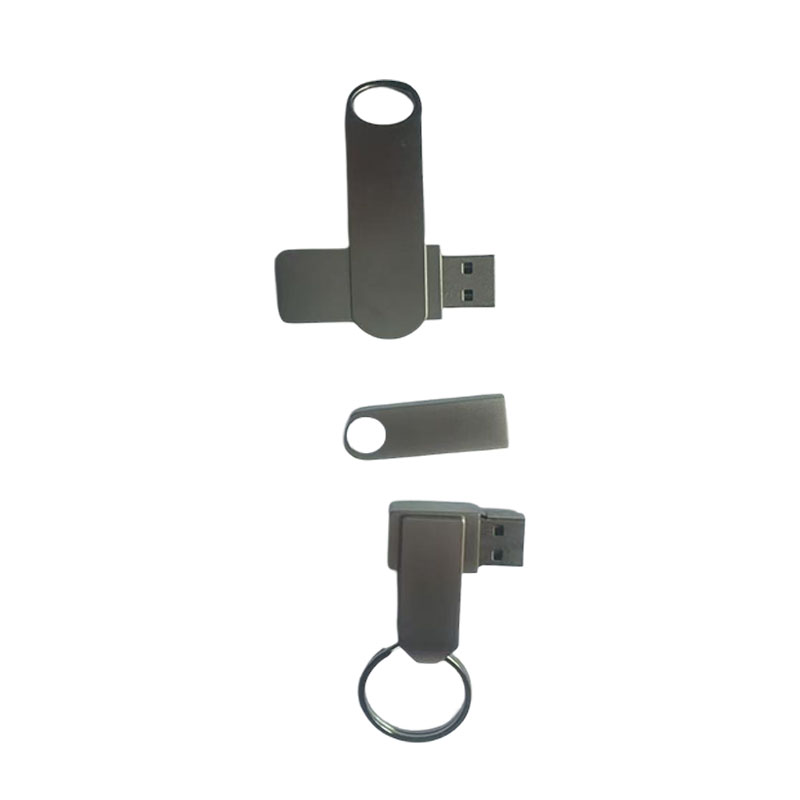
Despite integrating three interfaces, these USB flash drives maintain a compact and lightweight form factor, often featuring a rotating or sliding cover to protect the interfaces from daily wear and tear. A metal casing and waterproof/shockproof design further enhance reliability, making them suitable for diverse usage environments such as commuting, business trips, and outdoor activities.
The Micro USB Three-Port USB Flash Drive may seem like a simple upgrade to traditional storage media, but it is actually a precise response to the problem of "device silos." It solves the most complex cross-platform data transfer challenges with the simplest physical connection. In this era of ubiquitous wireless technology, it reminds us that sometimes, a reliable cable and a universal interface are the most solid foundation for digital freedom. One drive in hand, worry-free data – this is the true freedom that three-port USB flash drives offer to modern users.
1. Three-Interface Layout: Covering the Mainstream Device Ecosystem
The core advantage of this USB drive lies in its three-in-one physical interface design. One end is a standard USB-A interface, which can be directly plugged into Windows PCs, Macs, or traditional USB card readers; another end is a Micro USB interface, designed specifically for older Android phones, tablets, and some electronic devices; and the third end is a USB-C interface, compatible with the latest Android flagships, iPad Pro, MacBook, and mainstream thin and light laptops. All three components are integrated onto a single storage chip via an internal intelligent switching circuit. Users can seamlessly switch between different devices simply by flipping the USB drive, eliminating the hassle of carrying multiple adapters or relying on OTG cables.
2. Plug and Play: A Physical Channel Breaking Down System Barriers
Unlike wireless solutions that rely on Wi-Fi, Bluetooth, or cloud synchronization, the three-port USB drive provides a purely physical, offline, high-speed data transfer method. Whether in a conference room without network access, a subway with a dead signal, or in privacy-sensitive financial or medical settings, users can copy files simply by plugging and unplugging. More importantly, it bypasses the system barriers between iOS and Android, and Windows and macOS—photos, contracts, courseware, and other files do not require format conversion or dedicated apps. As long as the device supports the USB mass storage protocol, data can be read and written like a regular hard drive, truly achieving "what you see is what you get" cross-platform compatibility.
3. A Powerful Tool for Phone Storage Expansion and Emergency Backup
For Android users with limited storage space, the three-port USB drive is not only a transfer tool but also a mobile expansion drive. With OTG functionality, users can directly insert a USB flash drive into their phone to migrate photos, videos, and application data, freeing up valuable internal storage. They can also back up important data while traveling, preventing permanent data loss due to a lost or damaged phone. Some models also include built-in encryption software or password protection, ensuring the security of business documents or personal privacy while providing convenience.
4. Efficient Collaboration: Enhancing Multi-Device Workflow Efficiency
In hybrid device work scenarios, the three-port USB flash drive significantly optimizes workflows. Designers can sketch on an iPad using Procreate, save the image to the USB flash drive, and then refine it on a MacBook; students can record classroom audio on their Android phones and then archive it on their Windows computers afterward; engineers can collect device logs on-site using tablets and import them directly into analysis software back in the office—the entire process eliminates the need to upload to the cloud, wait for synchronization, or worry about version inconsistencies. This "physical transfer" mode is not only fast but also completely controllable and latency-free.
5. Compact, Portable, and Durable Design: Your Portable Data Hub
Despite integrating three interfaces, these USB flash drives maintain a compact and lightweight form factor, often featuring a rotating or sliding cover to protect the interfaces from daily wear and tear. A metal casing and waterproof/shockproof design further enhance reliability, making them suitable for diverse usage environments such as commuting, business trips, and outdoor activities.
The Micro USB Three-Port USB Flash Drive may seem like a simple upgrade to traditional storage media, but it is actually a precise response to the problem of "device silos." It solves the most complex cross-platform data transfer challenges with the simplest physical connection. In this era of ubiquitous wireless technology, it reminds us that sometimes, a reliable cable and a universal interface are the most solid foundation for digital freedom. One drive in hand, worry-free data – this is the true freedom that three-port USB flash drives offer to modern users.