


How can a Type-C/USB dual-interface USB flash drive achieve seamless data transfer in the era of multiple devices?
Release Time : 2026-01-23
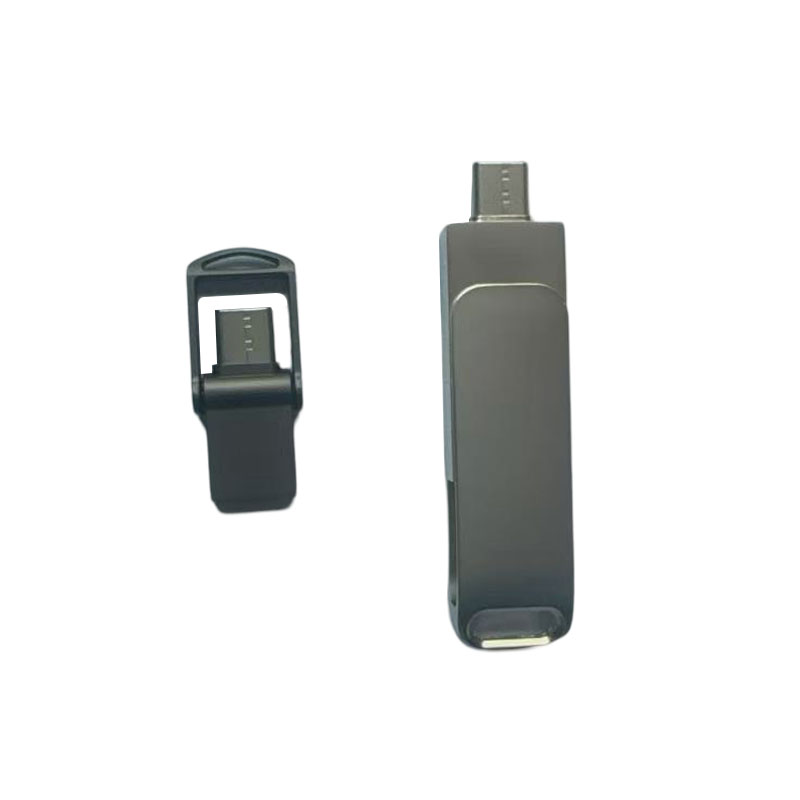
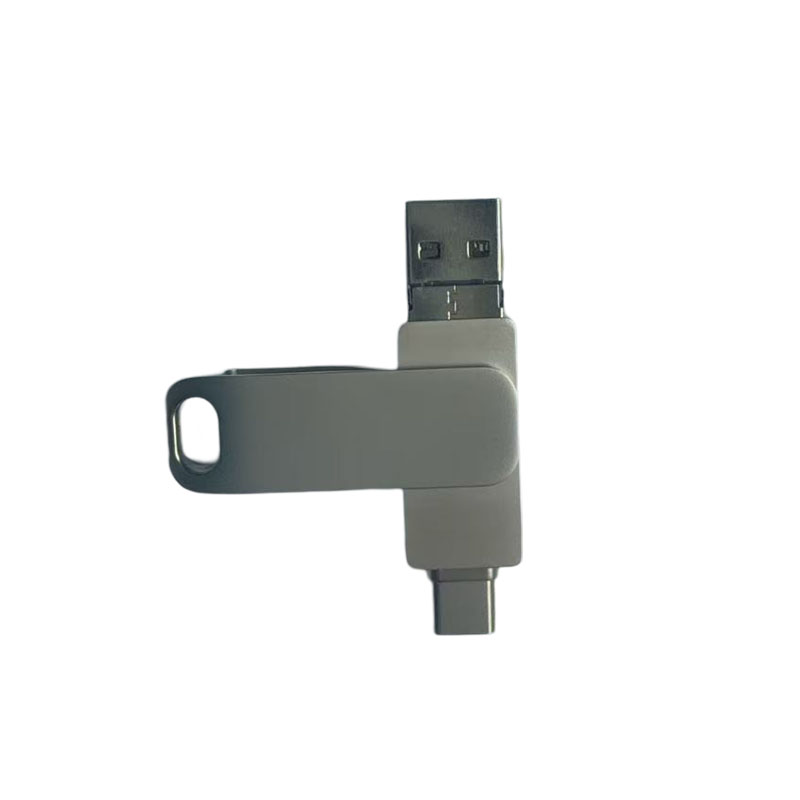
In this era where everyone owns multiple smart devices, we simultaneously possess computers with traditional USB interfaces, Type-C-enabled mobile phones, tablets, and even some TVs and in-vehicle systems. However, different interface standards have long fragmented our digital lives—wanting to export photos from a phone to a computer but having to search for adapters due to interface incompatibility; wanting to share files in a meeting but being awkwardly stopped because the USB flash drive cannot be plugged into the other party's device. The emergence of the Type-C/USB dual-interface USB flash drive is an elegant response to this pain point. With a symmetrical design of standard USB-A on one end and Type-C on the other, it can freely switch between various devices without any additional accessories, becoming a true "universal data bridge."
Its core value lies in its bidirectional compatibility in physical form. The USB flash drive integrates two mainstream interfaces on each end; users only need to select the corresponding end to plug in according to the device. This design eliminates the cumbersome reliance on adapters for traditional single-interface USB flash drives and avoids the clutter of carrying multiple USB flash drives. Whether copying work documents from an office computer to a personal mobile phone or importing videos taken during a trip from a tablet to a home TV, the entire process is seamless, truly achieving "plug and play." This seamless connection significantly improves efficiency and user experience, especially for users who frequently switch devices in mobile work, teaching presentations, or content creation scenarios.
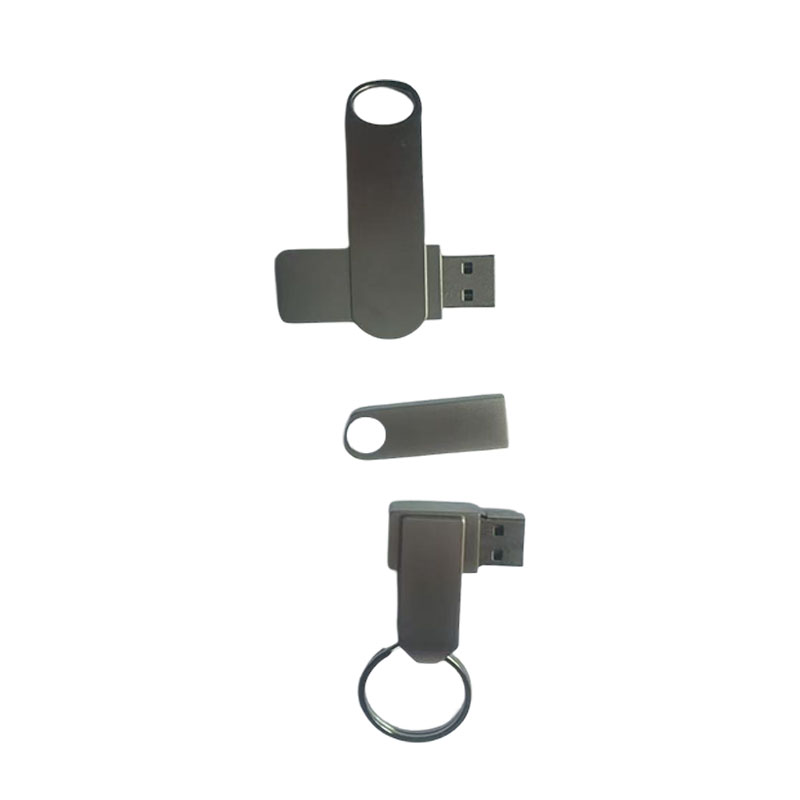
Furthermore, the structural design balances practicality and durability. To protect the delicate Type-C contacts, many dual-interface USB flash drives employ a rotating, sliding, or flip-top structure, effectively shielding both interfaces when not in use to prevent dust intrusion or bending of the metal pins. The casing is often made of aluminum alloy or high-strength engineering plastic, making it lightweight and portable while providing good impact resistance. Some products also cleverly embed indicator lights on the side, providing gentle prompts during transfers without affecting the overall sleek appearance. This attention to detail makes frequent plugging and unplugging worry-free and convenient.
At the functional level, dual-interface USB flash drives typically support broad device compatibility. They can read and write files across major operating systems like Windows, macOS, and Android, and are also recognized by smart TVs, game consoles, and in-vehicle entertainment systems for media playback or firmware updates. Some models also include built-in security encryption or backup software, further expanding their role in privacy protection and data management. Despite the innovative interface, their underlying storage logic remains stable and reliable, ensuring users can enjoy convenience without worrying about data integrity.
What's particularly valuable is that this design embodies a user-centric, inclusive mindset. It doesn't force users to upgrade all their devices to adapt to the new standard, nor does it consider older devices "obsolete." Instead, it respects the diversity of the current ecosystem, bridging generational differences with a small hardware innovation. In today's rapidly evolving technological landscape, this "forward-compatible yet backward-supportive" philosophy is precisely the most human-centered expression of technology.
Ultimately, the significance of a Type-C/USB dual-interface USB flash drive goes far beyond saving an adapter. It's about rebuilding connectivity integrity through minimalist design in a fragmented digital life. It doesn't overshadow the technology, yet it makes every data transfer effortless.
Because in a highly interconnected world, true convenience lies in making technology disappear without a trace, leaving only a smooth experience. And that dual-ended USB flash drive quietly lying in your pocket is the most ingenious carrier of this silent harmony.
Its core value lies in its bidirectional compatibility in physical form. The USB flash drive integrates two mainstream interfaces on each end; users only need to select the corresponding end to plug in according to the device. This design eliminates the cumbersome reliance on adapters for traditional single-interface USB flash drives and avoids the clutter of carrying multiple USB flash drives. Whether copying work documents from an office computer to a personal mobile phone or importing videos taken during a trip from a tablet to a home TV, the entire process is seamless, truly achieving "plug and play." This seamless connection significantly improves efficiency and user experience, especially for users who frequently switch devices in mobile work, teaching presentations, or content creation scenarios.
Furthermore, the structural design balances practicality and durability. To protect the delicate Type-C contacts, many dual-interface USB flash drives employ a rotating, sliding, or flip-top structure, effectively shielding both interfaces when not in use to prevent dust intrusion or bending of the metal pins. The casing is often made of aluminum alloy or high-strength engineering plastic, making it lightweight and portable while providing good impact resistance. Some products also cleverly embed indicator lights on the side, providing gentle prompts during transfers without affecting the overall sleek appearance. This attention to detail makes frequent plugging and unplugging worry-free and convenient.
At the functional level, dual-interface USB flash drives typically support broad device compatibility. They can read and write files across major operating systems like Windows, macOS, and Android, and are also recognized by smart TVs, game consoles, and in-vehicle entertainment systems for media playback or firmware updates. Some models also include built-in security encryption or backup software, further expanding their role in privacy protection and data management. Despite the innovative interface, their underlying storage logic remains stable and reliable, ensuring users can enjoy convenience without worrying about data integrity.
What's particularly valuable is that this design embodies a user-centric, inclusive mindset. It doesn't force users to upgrade all their devices to adapt to the new standard, nor does it consider older devices "obsolete." Instead, it respects the diversity of the current ecosystem, bridging generational differences with a small hardware innovation. In today's rapidly evolving technological landscape, this "forward-compatible yet backward-supportive" philosophy is precisely the most human-centered expression of technology.
Ultimately, the significance of a Type-C/USB dual-interface USB flash drive goes far beyond saving an adapter. It's about rebuilding connectivity integrity through minimalist design in a fragmented digital life. It doesn't overshadow the technology, yet it makes every data transfer effortless.
Because in a highly interconnected world, true convenience lies in making technology disappear without a trace, leaving only a smooth experience. And that dual-ended USB flash drive quietly lying in your pocket is the most ingenious carrier of this silent harmony.