


How do TF cards maintain high storage capacity while ensuring stable data read/write operations?
Release Time : 2026-02-19
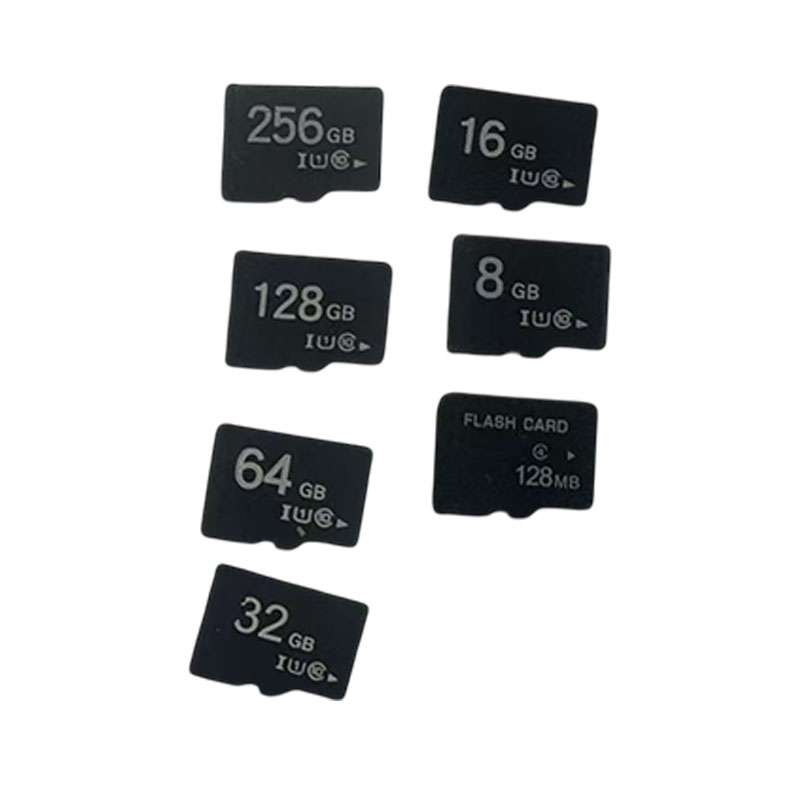
TF cards, as one of the most mainstream micro-portable storage media, are widely used in devices with stringent requirements for both size and performance, such as smartphones, action cameras, dashcams, and drones. With the increasing demand for high-definition video, high-resolution images, and large-application storage, TF card storage capacity has jumped from tens of MB in the early days to 1TB or even higher today.
1. Advanced Manufacturing Processes and 3D NAND Flash Memory Technology
The key to TF cards' high capacity lies in the NAND flash memory chips they use. Early TF cards mostly used planar NAND structures, but as manufacturing processes approached physical limits, manufacturers turned to 3D NAND technology—significantly increasing storage density without increasing chip area by vertically stacking storage cell layers. For example, mainstream products now use 96-layer or even 128-layer stacking. This structure not only increases storage capacity per unit area but also reduces interference due to increased cell spacing, improving write accuracy and long-term data retention, laying a hardware foundation for stability at high capacities.
2. Intelligent Controller and Firmware Algorithm Optimization
The microcontroller integrated within the TF card is its "brain," responsible for managing critical tasks such as data reading and writing, wear leveling, and error correction. High-capacity TF cards typically feature more powerful controllers, coupled with advanced firmware algorithms such as dynamic bad block management, garbage collection mechanisms, and write amplification optimization. These technologies effectively prevent localized aging caused by frequent erases and writes, distributing data evenly across different storage blocks and extending lifespan. Simultaneously, the controller can monitor voltage fluctuations, temperature changes, and other anomalies in real time, adjusting read and write strategies promptly to prevent data loss or corruption.
3. Error Correction Codes and Redundancy Design
As storage density increases, the probability of errors in individual storage units also rises. Therefore, modern high-capacity TF cards generally employ high-strength error correction code technology, such as LDPC, which automatically detects and corrects multiple errors during data reading. Some high-end products even introduce redundant storage areas, automatically switching to backup blocks when the primary storage area fails, ensuring user data integrity. This hardware-software combined fault-tolerance mechanism is a key technological guarantee for maintaining read and write stability at high capacities.
4. Speed Class and Interface Protocol Coordination
To match the high data throughput demands of large capacity, TF cards adhere to a strict performance standard system, including interface protocols such as UHS-I, UHS-II, and SD Express, and video speed classes such as U1/U3, V30/V60/V90. These standards not only specify minimum sustained write speeds but also require stable output under prolonged high-load operation. Manufacturers ensure that even at full capacity, nominal read and write performance is maintained without speed drops or interruptions by optimizing circuit layout, reducing signal interference, and improving power management efficiency.
In summary, the ability of TF cards to achieve up to 1TB of storage capacity within a space the size of a fingernail while maintaining reliable data read and write performance is inseparable from 3D NAND technology, intelligent controllers, advanced error correction mechanisms, standardized speed protocols, and comprehensive reliability design. The synergistic effect of these technologies allows TF cards to meet the massive storage needs of modern digital devices while still providing a stable, secure, and efficient data experience.
1. Advanced Manufacturing Processes and 3D NAND Flash Memory Technology
The key to TF cards' high capacity lies in the NAND flash memory chips they use. Early TF cards mostly used planar NAND structures, but as manufacturing processes approached physical limits, manufacturers turned to 3D NAND technology—significantly increasing storage density without increasing chip area by vertically stacking storage cell layers. For example, mainstream products now use 96-layer or even 128-layer stacking. This structure not only increases storage capacity per unit area but also reduces interference due to increased cell spacing, improving write accuracy and long-term data retention, laying a hardware foundation for stability at high capacities.
2. Intelligent Controller and Firmware Algorithm Optimization
The microcontroller integrated within the TF card is its "brain," responsible for managing critical tasks such as data reading and writing, wear leveling, and error correction. High-capacity TF cards typically feature more powerful controllers, coupled with advanced firmware algorithms such as dynamic bad block management, garbage collection mechanisms, and write amplification optimization. These technologies effectively prevent localized aging caused by frequent erases and writes, distributing data evenly across different storage blocks and extending lifespan. Simultaneously, the controller can monitor voltage fluctuations, temperature changes, and other anomalies in real time, adjusting read and write strategies promptly to prevent data loss or corruption.
3. Error Correction Codes and Redundancy Design
As storage density increases, the probability of errors in individual storage units also rises. Therefore, modern high-capacity TF cards generally employ high-strength error correction code technology, such as LDPC, which automatically detects and corrects multiple errors during data reading. Some high-end products even introduce redundant storage areas, automatically switching to backup blocks when the primary storage area fails, ensuring user data integrity. This hardware-software combined fault-tolerance mechanism is a key technological guarantee for maintaining read and write stability at high capacities.
4. Speed Class and Interface Protocol Coordination
To match the high data throughput demands of large capacity, TF cards adhere to a strict performance standard system, including interface protocols such as UHS-I, UHS-II, and SD Express, and video speed classes such as U1/U3, V30/V60/V90. These standards not only specify minimum sustained write speeds but also require stable output under prolonged high-load operation. Manufacturers ensure that even at full capacity, nominal read and write performance is maintained without speed drops or interruptions by optimizing circuit layout, reducing signal interference, and improving power management efficiency.
In summary, the ability of TF cards to achieve up to 1TB of storage capacity within a space the size of a fingernail while maintaining reliable data read and write performance is inseparable from 3D NAND technology, intelligent controllers, advanced error correction mechanisms, standardized speed protocols, and comprehensive reliability design. The synergistic effect of these technologies allows TF cards to meet the massive storage needs of modern digital devices while still providing a stable, secure, and efficient data experience.